
A recent national survey indicates that many Black, Hispanic and other minority individuals experience some form of discrimination or racism when they seek health care.
Since 63.9% of active physicians identify as white, while only 20.6% are Asian, 6.9% Hispanic, and only 5.7% as Black or African American, could this be a reason they experience racism in the doctor’s office?
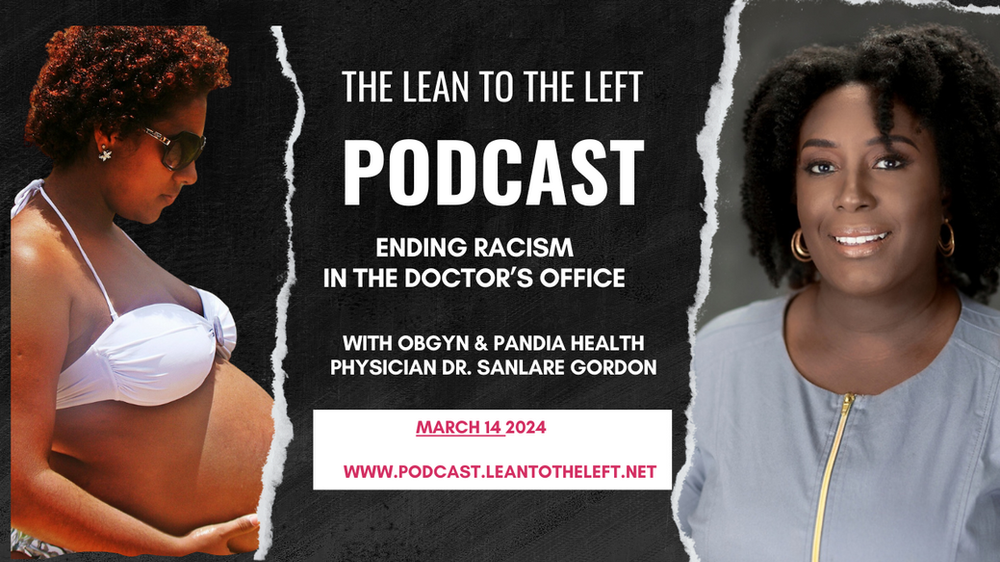
Dr. Sanlare Gordon, board-certified in obstetrics and gynecology, discusses this form of discrimination and racism on the Lean to the Left podcast. She is a staff physician at Pandia Health, the only women-founded and women-led birth control delivery service, and serves as a traveling OBGYN physician, filling in where there is a need — especially in small and rural communities where doctors are in short supply.
Why is it that women of color feel that they are the victims of racism in so many health care settings?
"The true answer is systemic racism, and we're still dealing with systemic racism, because there was absolutely a time to where blacks and Hispanics and indigenous people just weren't even allowed into medical schools," she says.
"And then finally there were medical schools that would allow us to be there, but it wasn't the majority. There will be like, okay, one or two per class. We do now have historically black colleges and universities that do have medical schools."
Then, she says, of the medical schools that are out there, "we don't have that many. In my class, we had 160 people. In my class of 160, it was eight black people. And I know that I can name all of them. They're all in my phone. So it's just really and truly not that many of us being actually admitted into the schools."
To change that, Dr. Gordon says more emphasis needs to be placed on teaching minority students how to take standardized tests and that more people of color should be hired for administrative positions, including in the medical school admissions process.
Dr. Gordon's interview is filled with humor and anecdotes about her experience as she discusses the impact of racism on people of color, particularly women, in the doctor's office or other medical facility. She talks about how Black or Hispanic women often are uncomfortable sharing their private medical concerns with white male doctors, and how often their conditions are misdiagnosed because of racial bias — and how that can lead to worsening conditions or even death.
Racism in the Doctor's Office
Listen here:
View the interview here: https://youtu.be/9tlrWXLLmcE
Interview transcript: