
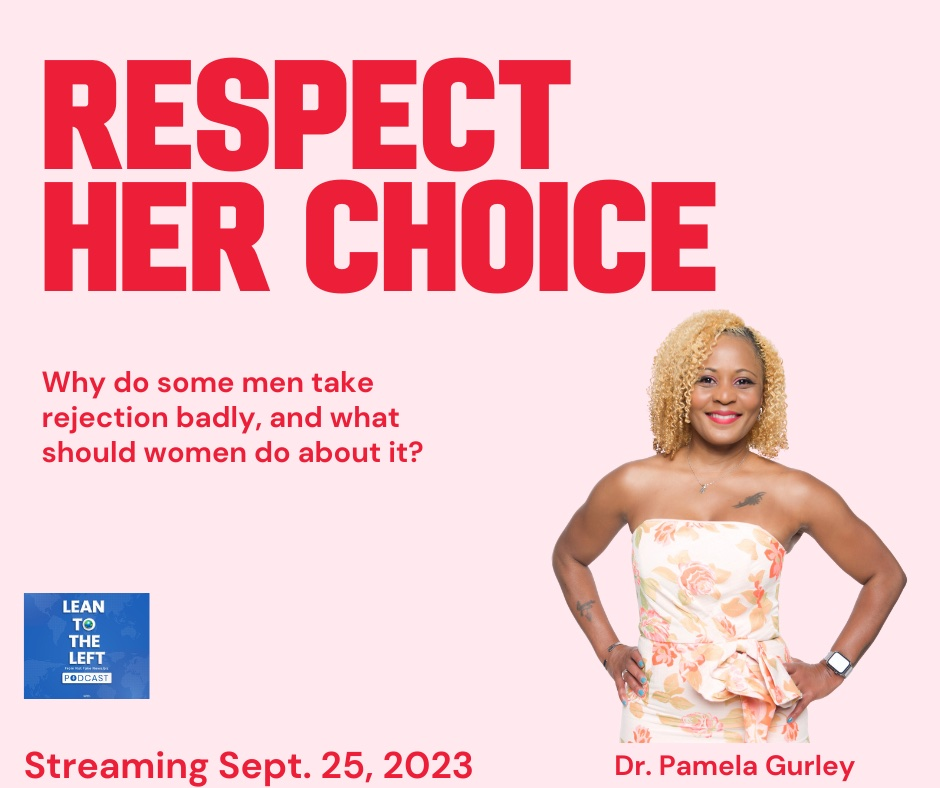
It's a common experience for a woman to stand up, look a man in the eye, and tell him "no." Whether it's because she's not interested in a romantic relationship or unavailable, "no" should be a simple word that carries little weight beyond the moment. (Dr. Gurley discusses this on the Lean to the Left podcast.)
Unfortunately, that's not the case for too many women. Simply saying "no" can put them at risk of verbal abuse, online harassment, or even physical violence. It's a toxic behavior that needs to stop. So, why do some men react negatively to rejection, and why is it important to call out this toxic behavior? After all, simply saying no should not be dangerous.
First, and probably the most detrimental reason men can't handle rejection is how they perceive it. In their minds, rejection means that they're not good enough or that they're being belittled. This can cause them to react aggressively in an attempt to regain control over the situation. Moreover, these men have been socialized with toxic masculinity that makes them feel like they have to win every situation they find themselves in, which includes women’s “yes” to their advances.
The second reason is rooted in misogyny and entitlement. Some men feel entitled to a woman's attention and affection and believe that "no" is a challenge that needs to be overcome. This toxic behavior is unacceptable and dangerous. We must recognize this behavior exists and that we need to do something about it.
Third is that many men are not socialized adequately enough to handle rejection without violent behaviors. An instance where such behavior can be found is stalking. Stalkers are obsessed with the idea of being with someone who is not interested in them. They refuse to recognize the glaringly obvious reality that their advances are unwanted, which can result in them slowly becoming more and more aggressive in their approach. This toxicity is fueled by the fact that men struggle with institutionalized mental health stigmatization, thus making it hard to seek help.
The last reason is the power and privilege attachment that comes with maleness. While women are victims of rejection, men are not immune to it. However, how men handle rejection is completely different from how women do. Women tend to handle rejection by ending their advances, seeking other options, or just accepting the situation for what it is. Men, on the other hand, take a proactive attitude to rejection, making women uneasy. In addition, when a man risks rejection and is declined, it can be seen as an affront to his masculinity, leading to toxic behaviors.
Saying "no" should never be a dangerous or life-threatening situation for women. However, too often, it is, and this toxic behavior must end.
The reasons for these behaviors are complex, but we must empower men and women to recognize and understand rejection from both perspectives. We must also educate men and women to understand that rejection does not have to be seen as an affront to one's masculinity or femininity.
Finally, we must hold men accountable for their behavior and actions when they respond to rejection maliciously. Only then can we maybe see the change needed to protect women.
Listen to the podcast:
View the podcast: https://youtu.be/Hqd9r8YYKOk