


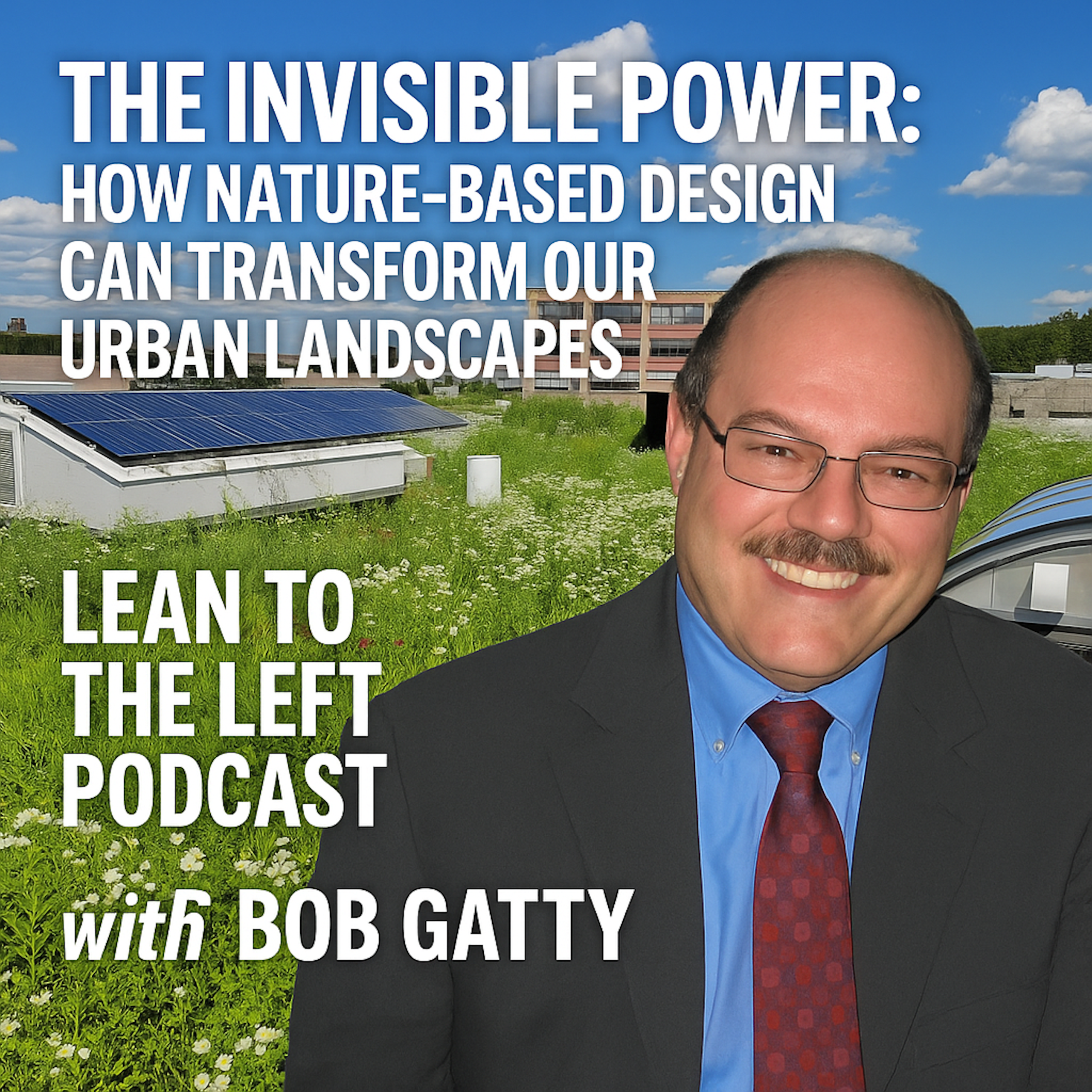
Welcome to a new perspective on urban living—one where modern infrastructure harmonizes with nature. In a recent episode of the Lean to the Left Podcast, host Bob Gatty explored with Joshua Harrison, co-founder and chief strategy officer of Leaf Island, how retrofitting cities with nature-based designs can combat climate change. With cities harboring over 80% of the U.S. population, facing rising temperatures and pollution, the benefits of green infrastructure are more crucial than ever.
Understanding the Concept of Green Roofs
At the heart of Joshua’s approach is the green roof, a solution that leverages water’s cooling properties. Plants, through the process of evapotranspiration, release water vapor that cools the surrounding air. This natural mechanism is essential in countering the urban heat island effect that plagues many cities.
Joshua elaborates on how densely populated areas, like Manhattan, could simulate historical temperatures simply by incorporating enough plant density across rooftops and sidewalls. The potential of these green spaces is boundless—they can house gardens, meadows, and even ecosystems that stabilize urban temperatures and promote biodiversity.
Innovating with Urban Waste
One of the most innovative aspects of Leaf Island’s approach is transforming waste into resource—using styrofoam as a component in artificial soil. This not only tackles the immense waste problem but also provides a lightweight solution to support rooftop gardens. By taking styrofoam out of landfills, Leaf Island is creating productive urban landscapes without adding structural burdens to existing buildings.
Global Inspirations and Local Implementations
Joshua points out that while the U.S. might be lagging in fully adopting green infrastructure, the world offers inspiring examples. Cities like Singapore and countries like France have mandated green roofs in new constructions, showcasing significant reductions in urban heat and pollution levels. Even cities like Mexico City are integrating green structures into their urban fabric, proving that nature-based design is a feasible and necessary adaptation to modern urban challenges.
What’s in it for Building Owners?
For urban building owners, the adoption of green roofs promises a plethora of benefits. From energy savings in heating and cooling costs to city-provided subsidies for installation, the financial incentives are significant. In addition, green roofs extend the lifespan of existing roofs by minimizing thermal expansion and contraction.
A Hopeful Outlook
Despite the challenges posed by current administrative standpoints on renewable energy, the momentum towards sustainability remains. Joshua reflects on historical precedents, reassuring listeners that current setbacks are a temporary phase in the broader march towards a sustainable future.
Joshua’s passion for integrating natural and urban environments shines through in this innovative approach to city living. As he eloquently puts it, “A society grows great when old people plant trees in whose shade they know they will never sit.” This ethos encapsulates the spirit of sustainable development for future generations. To learn more about Leaf Island’s pioneering work, visit their website or explore resources on how you can bring green infrastructure to your city.
The discussion with Joshua Harrison provides a clear blueprint for how cities can adapt to climate challenges by working with, rather than against, nature. It’s a vision of the future where urban life doesn’t mean detachment from the natural world but rather a harmonious coexistence. Embracing such innovations offers a path not only toward sustainability but also toward more resilient and livable urban spaces.
CHAPTERS:
00:00 Introduction to the Lean to the Left Podcast
00:10 The Environmental Challenge of Urban Heat
00:52 Introducing Joshua Harrison and Leaf Island
01:38 The Concept and Benefits of Green Roofs
03:17 Transforming Urban Spaces with Green Infrastructure
08:23 Challenges and Solutions for Existing Buildings
19:27 Global Examples of Green Infrastructure
21:49 Incentives and Benefits for Building Owners
24:08 Political and Environmental Perspectives
27:59 The Center for the Study of Force Majeure
30:40 Conclusion and Final Thoughts